Your firewalls run on IP addresses. Private cellular devices don't. OneLayer gives your existing security stack the device context it needs to enforce policies on cellular.

OneLayer feeds live device inventory directly into Palo Alto — so every asset on your private cellular network is visible, classified, and covered by your existing security policies.

OneLayer connects to Fortinet's security fabric with a complete, real-time picture of every device on your private cellular network — no blind spots, no manual updates required.

OneLayer integrates with Cisco's network infrastructure to automatically discover and fingerprint every device on your private cellular network — giving your team one accurate, always-current source of truth.
The Challenge
OneLayer extracts device-level telemetry from your private cellular core and routes it into your ITSM, asset management, and network performance tools. Where those tools give you network visibility, OneLayer adds the device layer: which devices are attached, what they are, and what changed.
IP-based rules break the moment a device's IP changes or a SIM is swapped, forcing policies to default to the most permissive device in the group.
Without cellular-native device identity, your security tools cannot classify or enforce policy on cellular assets. They are present on the network but effectively unmanaged.
Attach anomalies and unauthorized vendor detections have no path into your SOC workflow. Cellular-specific incidents go undetected until they become breaches.
What it does
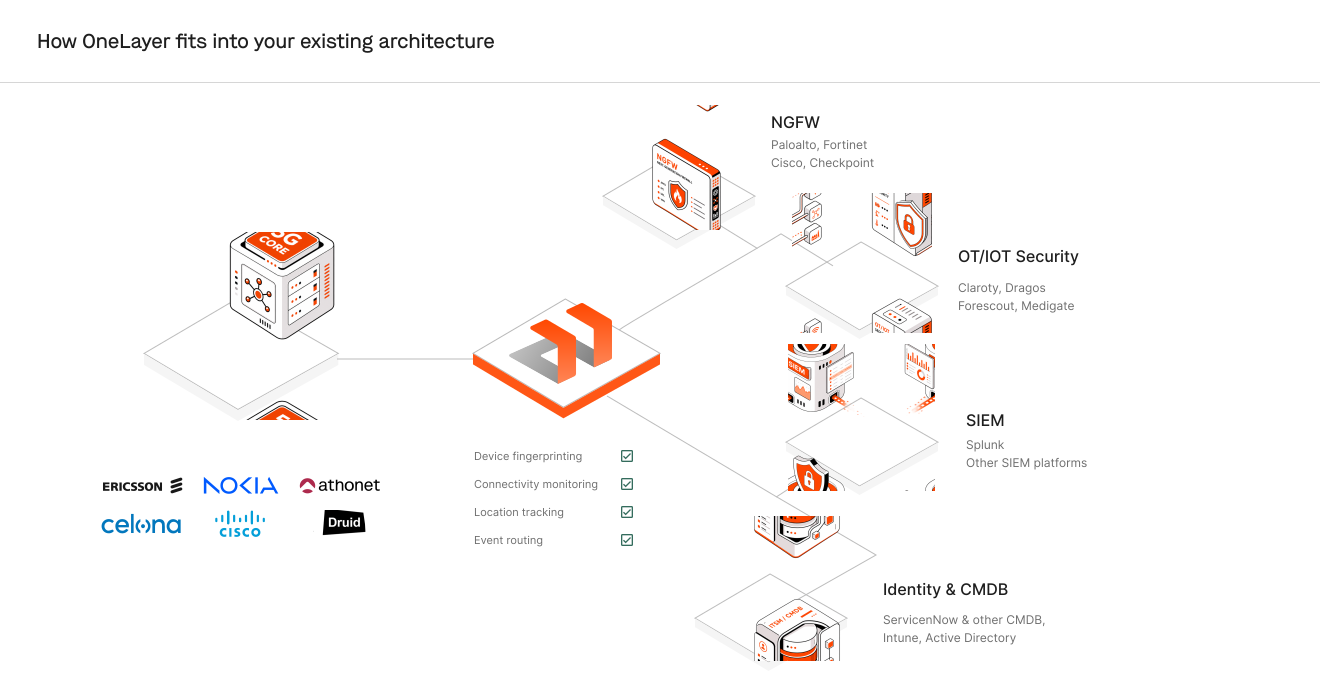
OneLayer connects to your private cellular core and extracts real-time device identity, including IMEI, IMSI, device type, manufacturer, group membership, and current IP. It translates that context into the language your security tools already speak: dynamic address groups, user-based policies, SIEM events, and CMDB records.
OneLayer integrates with firewalls including Palo Alto, Fortinet, Cisco, and Check Point via API, pushing device context as dynamic address groups. Policies follow the device, not the IP, and update automatically when attributes change.
Cellular security events, including unauthorized device attachments, prohibited manufacturer detections, and geofencing violations, route directly into your SIEM and SOC workflow without a new console or separate playbook.
OneLayer syncs cellular device identity with your CMDB and identity infrastructure. Your existing CMDB becomes the single source of truth, with identity policies extending to cellular endpoints for consistent access control.
What Our Partners Are Saying
"Our customers need connectivity and enterprise-grade security to work as one — our integration with OneLayer delivers exactly that."

in cooperation with




The transformation
From security gap to unified enforcement
Your NGFW console shows every cellular device in the right dynamic group. Your SIEM captures cellular threat signals. Your CMDB reflects every asset without a manual update. Private cellular is no longer a security exception. It is part of the perimeter, covered by the same tools and policies as the rest of your network.
Dynamic NGFW groups update automatically as IPs change or SIMs are swapped.
Unauthorized attachments and anomalies surface in your SIEM from day one.
Your CMDB reflects every cellular asset without manual data entry or reconciliation.
Common questions from network operations teams
No. OneLayer integrates with your existing NGFW, SIEM, and CMDB via API without modifying your configurations or network topology. It adds cellular device context to the tools you already use, so enforcement happens through your existing policies and workflows.
OneLayer has certified integrations with Palo Alto Networks, Fortinet, Cisco, and Check Point, pushing cellular device attributes as dynamic address groups for policy enforcement. Additional NGFW and security tool integrations are available on request.
Most integrations go live within days, not months. OneLayer connects to your private cellular core via certified API, and the initial configuration of dynamic address groups and SIEM event routing typically completes in a single implementation session.
OneLayer continuously monitors the cellular core for attribute changes — including IP reassignments, SIM swaps, and group membership updates — and pushes updated context to your NGFW in real time. Policies follow device identity, not the IP, so enforcement never lapses during a change.
Yes. OneLayer supports on-premise deployment for organizations that require data to remain within their own environment. The platform connects to your cellular core and security stack without routing device data through external cloud infrastructure.