Your traffic rides the carrier's RAN and core, logically segregated as a dedicated APN, so there's no network to build. OneLayer gives you a single pane of glass the moment devices are live across more than one carrier, a gap no carrier portal alone can close.
Supported carrier networks



The Challenge
Enterprises running a dedicated APN across multiple carriers get wide-area reach without ever building a core. But each carrier ships its own portal, and visibility fragments the moment more than one is in play, the exact gap that slows onboarding, troubleshooting, and every incident response call.
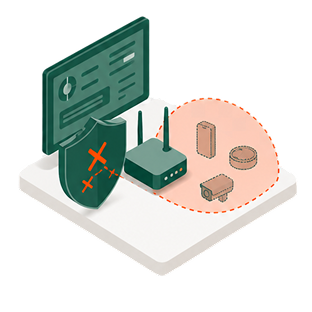
Security tools only see what one carrier's portal shows them. A device that's active on paper but hidden behind a router is a blind spot your team won't find until something breaks.
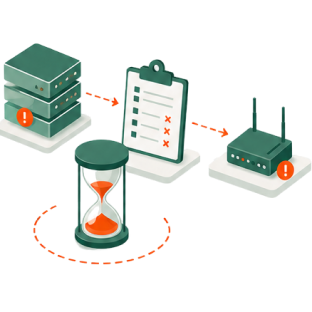
Every carrier has its own portal and its own process for applying policy to a new device, so getting consistent treatment means repeating the same manual steps two or three times over. That bottleneck grows with every device added.

When a device goes dark, your team checks whichever carrier portal it lives on, then correlates that against your own inventory by hand, adding hours to every incident.
The Solution
How OneLayer Fits: One Pane of Glass
Across Every Carrier
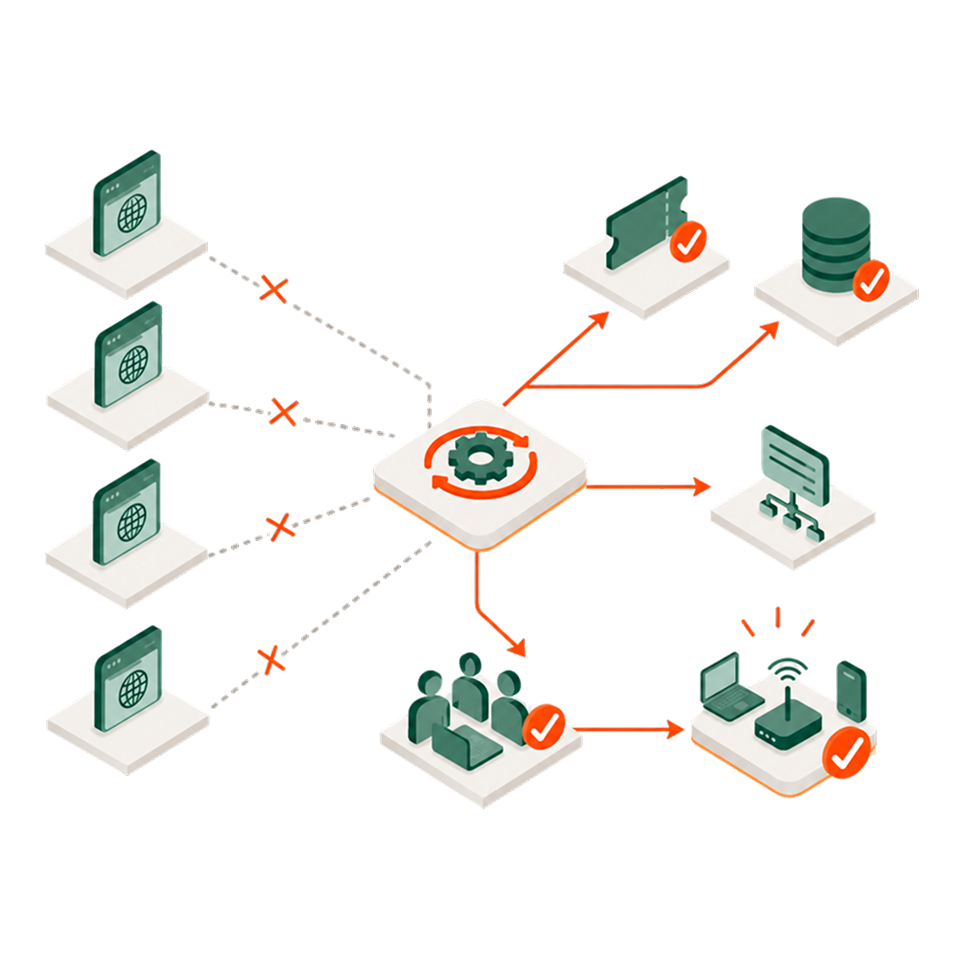
OneLayer Bridge connects to Verizon, AT&T, and T-Mobile alike and binds each SIM to a verified device fingerprint, network by network, unifying it all into one pane of glass. Read-only, agentless, no changes to the running network, and no SIM provisioning to manage: OneLayer sits on top of whatever each carrier already handles and turns three portals into one operational view.

Onboard
The moment a device appears on any carrier network, OneLayer applies the same identity and policy record automatically, no manual setup in that carrier’s portal. Every device gets consistent policy from day one, whether it’s on its first carrier or its third.
Observe
Automatic fingerprinting classifies make, model, vendor, and protocol, not just a carrier-assigned ID, extending discovery to assets hidden behind routers that carrier portals don’t show. Cellular threats like IMEI spoofing and SIM swaps surface alongside policy violations, all in the same pane of glass, exported straight to your SOC.

Protect
OneLayer feeds the device identity your NGFW needs for per-device access control and identity-based segmentation, unified across every carrier instead of siloed per portal. A flagged device gets blocked at the firewall instead of just logged, no matter which carrier surfaced it.
What Our Customers Are Saying
“What used to take us 15 steps we now have down to 1 or 2 steps before we can act.”

No. OneLayer extends your existing Zero Trust architecture to cover the carrier APN, which most ZTNA tools were never designed to reach. Your current stack (NAC, MDM, ISE, SIEM) continues to operate as is. OneLayer integrates with it, surfacing cellular connection events and policy decisions into the same workflows your security team already uses.
OneLayer uses signature-based fingerprinting for unmanaged devices. A device identity is built from stable, device-specific attributes: IMEI, radio behavior, connection patterns, and other observable characteristics. That signature becomes the identity assertion at connection time, the same way across every carrier you run. Certificate-based validation is used for managed endpoints that support it.
OneLayer connects to each carrier independently and binds every SIM to a verified device fingerprint, carrier by carrier. Because identity and policy live with the device rather than inside any single carrier’s portal, the same policy applies automatically the moment a device is live, whether it’s on its first carrier or its third. That is what turns three separate portals into one pane of glass.
No. OneLayer is read-only and agentless. It connects to each carrier’s existing portal without requiring changes to your SIMs, devices, or network hardware, and without taking on any SIM provisioning of its own. It sits on top of whatever each carrier already handles today.