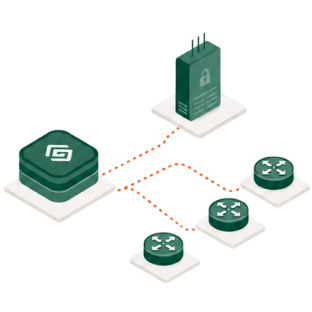
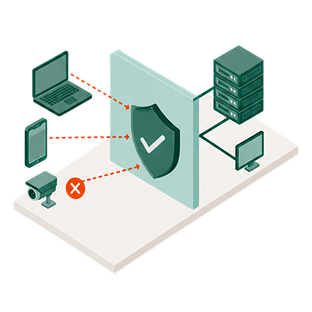
Your Zero Trust stack secures every network you operate, except private cellular.
OneLayer closes the gap by verifying every device before it connects and enforcing device-level microsegmentation after it does.
The Gap in Your Zero Trust Coverage
For every network in your enterprise (wired, Wi-Fi, cloud) you have a way to verify device identity and enforce access policy. Private 5G and LTE are the exception. The tools you've built your Zero Trust architecture around were never designed to reach the cellular connection layer.
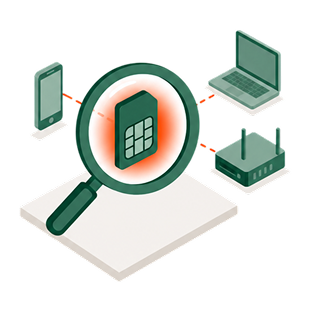
SIMs get swapped, reassigned, and moved into unauthorized hardware through operational error or deliberate action. SIM authentication alone is not device verification. Your ZTNA policy needs to know the difference.
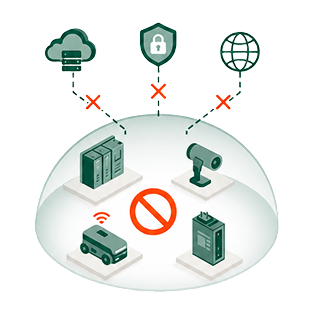
PLCs, sensors, AGVs, and safety controllers cannot carry certificates. Your MDM, NAC, and ZTNA tools can't reach them. They connect to your most critical networks with no verified identity and no policy enforced.
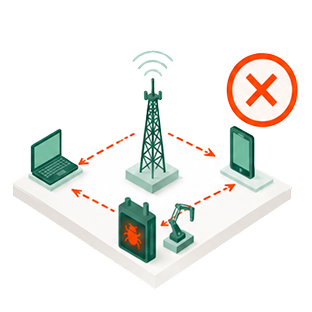
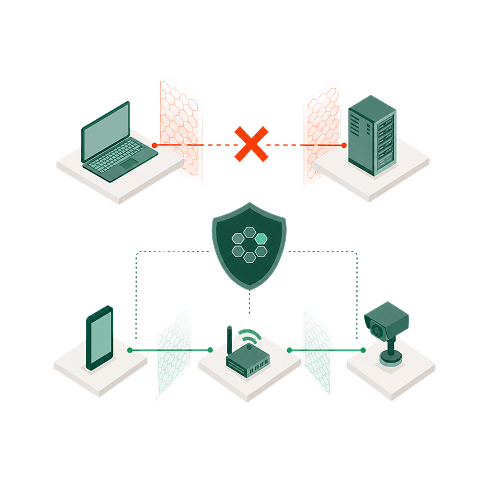
Once a device is on your private cellular network, nothing prevents it from communicating with devices it shouldn't. Without microsegmentation at the device level, a compromised device can move freely across your operational environment.
How OneLayer Works
Verified before they connect.
Isolated after they do.
OneLayer extends Zero Trust to private 5G and LTE networks through two coordinated controls: a staged onboarding environment that verifies every device before it reaches production, and device-level microsegmentation that enforces communication boundaries once they do.

Secure Onboarding
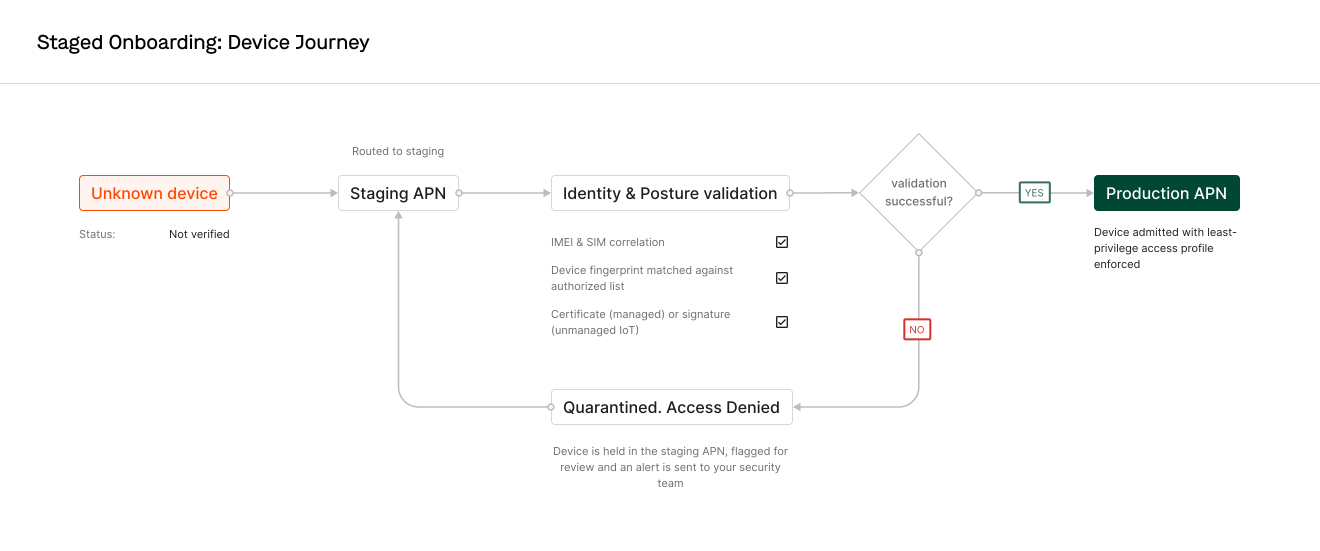
Every new device lands in a staging APN (an isolated DMZ) where identity and posture checks run automatically. Only verified devices join production.
Microsegmentation
Verification at connection is only half the equation. OneLayer enforces microsegmentation at the cellular layer: if communication isn’t permitted by policy, it’s blocked.
Stack Integration
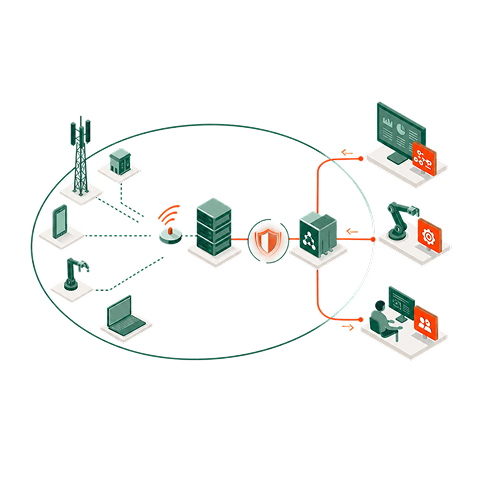
OneLayer integrates directly with your mobile core, intercepting and validating every connection request, then surfacing decisions into the SIEM, SOAR, and SOC workflows your team already operates.
Getting Started Is Straightforward
No hardware changes. No SIM replacements. No disruption to existing connectivity.
Connect OneLayer to your 5G or LTE core. Your existing SIMs, devices, and connectivity stay completely untouched.
Every new device routes through the staging APN. Verified devices join production with a minimal-privilege profile. Unverified devices stay isolated.
Microsegmentation policies activate. Every cellular connection event streams to your SIEM; your SOC has full visibility over private cellular.
What Our Customers Are Saying
“Together with OneLayer, a Private 5G ecosystem partner, Palo Alto Networks is revolutionizing private cellular network adoption by integrating an AI-powered Zero Trust security approach with device provisioning, enabling critical industries to achieve digital transformation.”

What Zero Trust Coverage Looks Like
Imagine a private cellular network that operates with the same Zero Trust rigor as your cloud, wired, and wireless infrastructure. Every device has a verified identity. Nothing reaches production without clearing the staging gate. And if a device tries to communicate outside its defined boundary, it can't.
solution brief
The ZTNA Technical Whitepaper covers the full architecture: enforcement models, identity approaches for managed and unmanaged devices, and integration guidance for enterprise security teams.
Download Solution Brief
No. OneLayer extends your existing Zero Trust architecture to cover private cellular networks, which most ZTNA tools were never designed to reach. Your current stack (NAC, MDM, ISE, SIEM) continues to operate as-is. OneLayer integrates with it, surfacing cellular connection events and policy decisions into the same workflows your security team already uses.
For unmanaged IoT and OT devices, OneLayer uses signature-based fingerprinting. A device identity is constructed from stable, device-specific attributes: IMEI, radio behavior, connection patterns, and other observable characteristics. This signature becomes the identity assertion at connection time. Certificate-based validation is used for managed endpoints that can support it.
The staging APN is an isolated network environment that new devices are routed to before they can reach your operational network — a DMZ for cellular traffic. No production data or systems are accessible from it. Once a device passes identity and posture checks in the staging APN, it is moved to the production APN with a minimal-privilege profile applied. Devices that fail checks remain in the staging APN and trigger alerts.
No changes to existing SIMs, devices, or network hardware are required. OneLayer integrates at the mobile core level, intercepting and validating connection requests as part of the authentication flow. Your devices, SIMs, and physical network infrastructure remain untouched.
Policies are defined based on device identity attributes: type, operational role, location, or business unit. Groups can be created directly in OneLayer or pulled from existing systems such as your CMDB, MDM, or NAC. Enforcement happens at the cellular connection layer and is passed to your existing firewall or enforcement infrastructure. Any communication attempt that violates a policy is blocked and an alert is generated.