Satellite Is the Next Cellular Frontier for Utilities
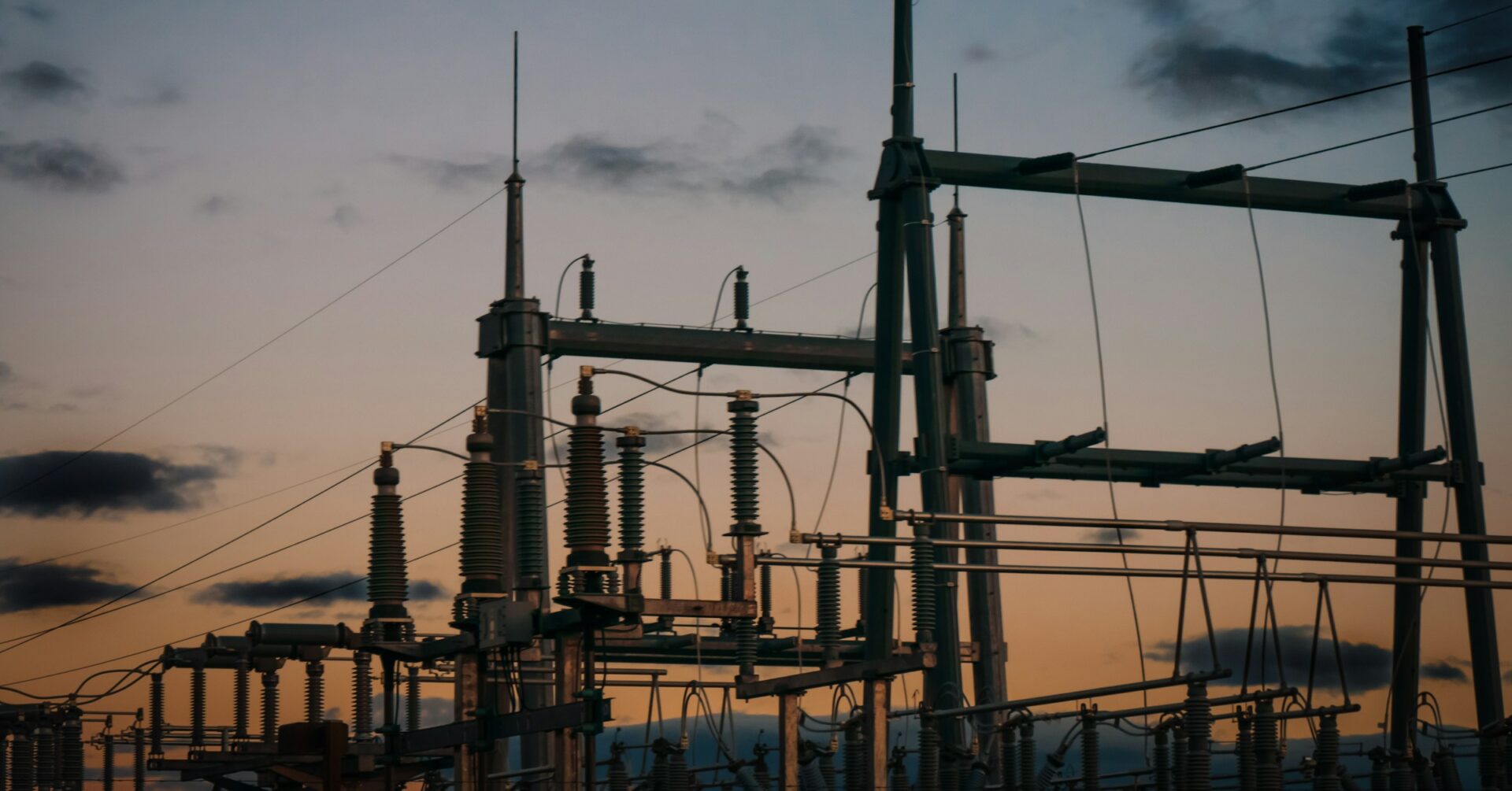
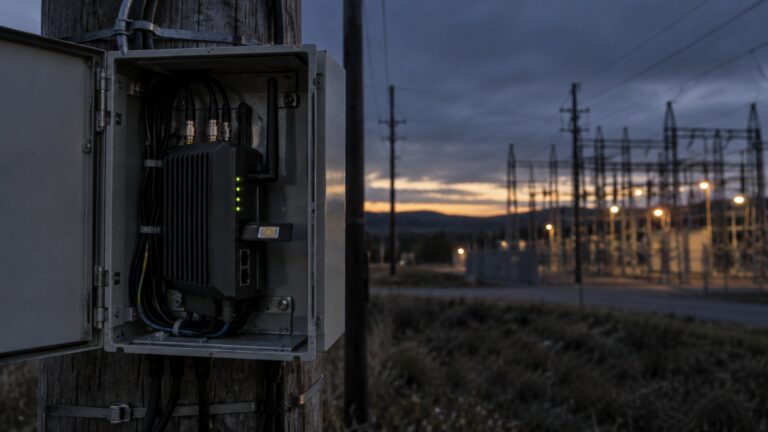
The storm has passed, but the substation still hasn’t heard from its reclosers. The private LTE site on the ridge lost commercial power hours ago, and its batteries are running down. The carrier tower the cellular routers were set to roam onto went dark in the same storm, on the same grid. Inside the cabinet, a router keeps trying to attach to a network that isn’t there. Does anyone on the team know which devices dropped, and which ones found another way back?
Cellular is no longer a side network for utilities. It carries the signals the grid runs on. At the UBBA Summit & Plugfest in Fort Worth last week, session after session described private LTE as foundational to grid modernization. Anything that foundational needs its own backup. For a growing number of utilities, that backup is satellite, and the shift underneath it matters more than the hardware: satellite is becoming one more cellular access path, not a separate network. This post covers why that is happening, and what it asks of the teams who run these networks.
Cellular is now part of how the grid runs
The UBBA agenda read like a list of grid operations that now depend on cellular:
- Storm preparation. Southern Company’s operating companies are running AI weather stations over private LTE to improve storm prediction and field staging.
- Flood response. LCRA presented its private cellular network as part of emergency response, including flood management.
- Wildfire mitigation. SDG&E and partners covered falling-conductor protection over private LTE, which has to detect and isolate faults in milliseconds.
All three are disaster workloads. They need the network most on the days the network is most likely to be damaged.
The vendor headlines this month point the same way. Nokia agreed to sell its Enterprise Campus Edge unit to AURELIUS, and Ericsson moved private 5G into its core Networks business. These are vendor portfolio choices. Utility demand keeps building on the grid side, where wide-area networks look nothing like a factory campus.
The question is no longer whether the grid runs on cellular. It is what the grid runs on when cellular goes down.
The single-path problem
Most utility backup plans today follow one pattern: when the private network drops, devices roam onto a public carrier. That works for a fiber cut or a single failed site. In a hurricane, a wildfire shutoff or a flood, the carrier network depends on the same towers, the same backhaul and the same power. The backup fails for the same reason as the primary.
Failover also creates a second problem. Tampa Electric’s team raised it directly at UBBA: a backup strategy has to include getting devices back onto the private network after a failover. A device that leaves the private network and never cleanly returns is a device the team has lost track of.
A backup path that fails in the same storm is not a backup path.
Who feels it when devices go dark
I joined a UBBA panel called “When Devices Go Dark” with utility network leaders from Xcel Energy, Ameren and Southern Linc. We focused on what happens when field devices drop off: where troubleshooting gets stuck, and how teams find the root cause faster.
The impact reaches past the telecom team:
- Field crews wait for restoration orders that depend on knowing which devices still report.
- Control room operators lose sight of the field at the moment they need it most.
- Security and compliance teams lose track of devices that moved onto a path nobody is watching, and they still have to account for every one of them.
When a device changes networks, the people responsible for it shouldn’t lose track of it.
Satellite joins the cellular family
The same week, UBBA hosted a fireside chat on utility connectivity with Starlink, with Starlink, Ameren and Southern Linc on stage. The session’s published description framed satellite two ways: as the main connection where terrestrial networks can’t reach, and as added redundancy where they can.
Europe’s largest operators are moving the same direction. On October 19, Deutsche Telekom, Orange, Telefónica and Vodafone signed a Letter of Intent to explore a joint bid for European Mobile Satellite Services spectrum to advance direct-to-device services. The European Commission is reallocating that 2 GHz spectrum when the current licences expire in May 2027. Mobile operators don’t bid for spectrum to run a side business. They are pulling satellite into mobile service itself.
There is a catch. The four operators’ satellite partner is still to be selected, and each access path still comes with its own portal, its own identifiers and its own rules. For a utility, three paths can mean three disconnected views of the same device.
The path changes. The device doesn’t.
One identity across every path
A utility network now has three ways to reach a field device:
- Private LTE or 5G, on the utility’s own core and spectrum.
- Carrier APNs, on private APNs over public cellular networks.
- Satellite, through terminals today and direct-to-device service as it matures.
Each path fails differently without a shared identity. A device arrives on a new path and nobody recognizes it. Its policy stays behind on the old one. It never returns cleanly to the private network. The fix is the same in all three cases: anchor identity and policy to the device itself, not to the network it happens to be on.
Platforms such as OneLayer verify device identity and enforce policy across private cellular networks and carrier APNs. That same principle has to hold as satellite paths come online.
What the storm looks like with one identity
Go back to the substation. The ridge site loses power, and a recloser moves to its satellite path. The network team sees the move as it happens. The device keeps its identity and its policy. When the private site comes back, the recloser returns, and the team can confirm that it did.
Questions to ask your team this week:
- Which of our field devices have a satellite path today, and who manages it?
- When a device fails over, does our asset inventory show where it went?
- Does device policy follow the device across private LTE, carrier APN and satellite?
- How do we confirm a device returned to the private network after a storm?
- Does our backup path share towers, power or backhaul with our primary?
- Who owns the device record when the path belongs to another provider?
Resilience is the same network reaching further
Satellite doesn’t make cellular less important for utilities. It extends cellular to the places and the days where towers can’t reach. Resilience isn’t another network. It’s the same network reaching further.
“UBBA is dedicated to collaborating with leading solutions like OneLayer’s Zero Trust security and asset management of private cellular network devices. Together, we are advancing utility networks, and accelerating the journey toward a secure, resilient, and future-proof grid.”
Bobbi Harris, Executive Director, UBBA
To see how utilities keep every device visible and governed across private networks and carrier APNs, explore OneLayer Bridge.

VP Alliances & Marketing, OneLayer